
When NBA legend Kobe Bryant underwent microfracture surgery on his knee in 2003, the procedure was already revolutionizing the treatment of cartilage defects in knee joints. Today, this innovative technique has evolved to address a similarly complex area: hip cartilage defects.
At the American Hip Institute (AHI), our expert surgical team has been at the forefront of adapting and perfecting this procedure for hip arthroscopy, offering new hope to both athletes and everyday individuals suffering from debilitating hip pain.
Understanding Hip Cartilage Damage
The hip joint's articular cartilage serves as a crucial shock absorber, allowing for smooth movement between the femoral head and acetabulum. When this cartilage becomes damaged - whether through athletic activity, repetitive motions, or general wear and tear - it can lead to persistent pain, reduced mobility, and eventual arthritis if left untreated. Unlike other tissues, cartilage has limited natural healing capacity due to its lack of blood supply, making surgical intervention often necessary to stimulate healing.
The Science Behind Microfracture
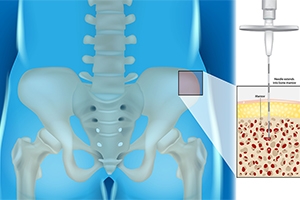
Microfracture surgery represents a significant advancement in cartilage regeneration technology. During this minimally invasive arthroscopic procedure, surgeons create small, precisely placed holes in the bone beneath the damaged cartilage area. These perforations expose the bone’s marrow, which contains cells that help stimulate the growth of new cartilage-like tissue. While this new tissue isn't identical to the original cartilage, it can help reduce pain and improve joint function by filling in the defect and providing a cushioning effect.
The procedure’s success in hip applications builds upon years of documented success in knee surgery. However, performing microfracture in the hip presents unique challenges that require specialized expertise. The hip’s ball-and-socket structure demands precise surgical technique and advanced arthroscopic skills—areas where surgeons at American Hip Institute have demonstrated particular excellence.
From Athletes to Everyday Individuals
While professional athletes often make headlines with their surgical procedures and comebacks, microfracture surgery has proven equally valuable for non-athletes seeking to maintain an active lifestyle. The procedure’s minimally invasive nature typically results in shorter recovery times compared to traditional open surgery, and many patients report significant pain reduction and improved mobility within months of the procedure.
Success rates for hip microfracture surgery have been particularly encouraging. Research studies have shown that properly selected patients often experience substantial pain relief and functional improvement, with many returning to their previous activity levels.
The Future of Cartilage Regeneration
As leaders in arthroscopic hip surgery, American Hip Institute continues to refine and advance microfracture techniques. Current research focuses on combining microfracture with biological augmentation strategies, such as stem cell therapy and growth factors, to potentially enhance the quality of the new cartilage and the healing process. These developments suggest that the future of cartilage regeneration will likely involve increasingly sophisticated approaches to optimize healing and long-term outcomes.
For individuals suffering from hip cartilage damage, microfracture surgery represents more than just a treatment option, it offers the possibility of returning to an active, pain-free lifestyle. As surgical techniques continue to evolve and our understanding of cartilage biology deepens, we can expect even more innovative solutions for addressing hip cartilage defects.
Consult With the Experts at AHI
Whether you're an athlete looking to return to competition or someone seeking relief from chronic hip pain, the expert team at American Hip Institute is here to help evaluate your condition and discuss your treatment options. Our pioneering work in hip arthroscopy and microfracture techniques has helped countless patients return to their active lifestyles. To learn more about how microfracture surgery might help address your hip cartilage issues, contact us today for a consultation.
FAQs
Q1: What is microfracture surgery for the hip and how does it work?
Hip microfracture surgery is a minimally invasive arthroscopic procedure in which small, precisely placed holes are created in the bone beneath a damaged cartilage area. These perforations expose bone marrow containing cells that stimulate the growth of new cartilage-like tissue, helping to fill the defect, reduce pain, and restore cushioning in the joint. Because cartilage has limited natural healing capacity due to its lack of blood supply, microfracture provides a way to jumpstart repair that the body cannot achieve on its own.
Q2: Who is a good candidate for hip microfracture surgery?
Hip microfracture surgery is best suited for patients with localized cartilage defects caused by athletic activity, repetitive motion, or general wear and tear who are experiencing persistent hip pain and reduced mobility. Both athletes looking to return to competition and active individuals seeking relief from chronic hip pain can be strong candidates. A thorough evaluation including imaging and a review of symptoms and activity level helps determine whether microfracture is the most appropriate intervention.
Q3: What is the recovery time after hip microfracture surgery?
Because microfracture is performed arthroscopically, recovery is generally shorter than with traditional open surgery. Many patients begin experiencing meaningful pain reduction and improved mobility within months of the procedure. Full recovery and return to previous activity levels varies depending on the size of the cartilage defect, overall joint health, and commitment to rehabilitation, making post-operative physical therapy a critical component of successful outcomes.
Q4: How is hip microfracture surgery different from knee microfracture surgery?
While the underlying principles of microfracture are similar for both joints, performing the procedure in the hip presents unique technical challenges due to its deep ball-and-socket structure. Hip microfracture requires advanced arthroscopic skills and specialized surgical expertise that go beyond what is needed for knee applications, making the experience and training of the performing surgeon a particularly important factor in achieving successful outcomes.
Q5: Can microfracture surgery be combined with other hip treatments?
Yes. Current research is increasingly focused on combining microfracture with biological augmentation strategies such as stem cell therapy, platelet-rich plasma, and growth factors to enhance the quality of new cartilage tissue and optimize the healing process. These combined approaches represent the next frontier in cartilage regeneration, offering the potential for more durable and higher-quality repair tissue compared to microfracture alone.
Reference Links: