
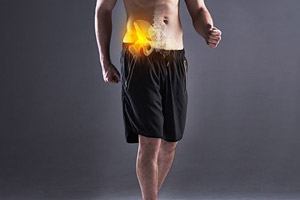
Have you ever experienced a popping, snapping, or clicking sensation in the hip with walking or certain hip movements? There is usually very little pain or discomfort associated with it initially;it’s more of an annoyance than anything else. But if left untreated, the condition could become painful and limit mobility. So, let’s consider why your hip tends to “pop” when you walk.
You may have what is known as a snapping hip or dancer’s hip. It is mostly seen in athletes or dancers in their teens or 20s. This condition is caused by the snapping of muscle tendons over bone structures around the hip. It may also be seen in patients with one leg longer that is than the other. There are 3 different types of snapping hip based on the structures that are involved.
The most common type of snapping hip involves the psoas muscle tendon which attaches to the thigh bone. The psoas muscle allows you to flex your hip. Too much sitting causes the tendon to get tight, forcing it to rub against a bony prominence (iliopectineal eminence) in the front upper aspect of the pubic bone, leading to the popping sensation with certain hip movements.
Another type of snapping hip involves the IT band which runs along the outside of the hip. A tight IT band may rub against the bony protuberance on the side of the femur (thighbone), causing the popping sensation.
The final cause of snapping hip involves the tearing of the hip labrum, which is a rim of cartilage around the hip socket. This may occur due to injury or trauma. A clicking or popping sensation is felt as the end of the femur moves over the torn labrum when you walk.
For the most common types of snapping hip, physical therapy stretching exercises for the psoas muscle and IT band should be able to reduce the popping sensation. Hip arthroscopy is usually the best treatment for a torn labrum, enabling return to sports or dance at the highest level.
FAQs
Q1: What causes a snapping or popping sensation in the hip?
A snapping or popping hip, also known as snapping hip syndrome or dancer's hip, is caused by muscle tendons snapping over bony structures around the hip joint. The three most common causes are the psoas tendon rubbing against a bony prominence at the front of the pubic bone, a tight IT band snapping over the bony protuberance on the side of the thighbone, or a torn hip labrum where the femoral head moves over the damaged cartilage during walking and certain hip movements.
Q2: Is a snapping hip something to be concerned about?
In its early stages, a snapping hip is typically more of an annoyance than a serious medical concern, with little to no pain or discomfort. However, if left untreated the condition can become progressively painful and begin limiting mobility and athletic performance over time. Seeking evaluation when the snapping first appears — particularly if it is accompanied by pain, weakness, or instability — gives the best chance of addressing the underlying cause before it worsens.
Q3: Who is most likely to develop snapping hip syndrome?
Snapping hip syndrome is most commonly seen in athletes and dancers in their teens and twenties due to the repetitive hip movements and flexibility demands of their activities. People who spend prolonged periods sitting are also at risk, as excessive sitting tightens the psoas tendon and causes it to rub against the underlying bone. Individuals with one leg longer than the other may also be predisposed to developing this condition.
Q4: How is snapping hip syndrome treated?
Treatment depends on the underlying cause of the snapping. For the most common types involving the psoas tendon or IT band, targeted physical therapy stretching exercises are typically effective at reducing tension in the affected structures and eliminating the snapping sensation. When the snapping is caused by a torn hip labrum, hip arthroscopy is usually the recommended treatment, allowing the surgeon to repair the labral damage and enabling a return to sports or dance at the highest level.
Q5: Can too much sitting cause snapping hip syndrome?
Yes. Prolonged sitting is a known contributing factor to one of the most common forms of snapping hip syndrome. Extended periods of sitting cause the psoas tendon to tighten, which forces it to rub against a bony prominence at the front of the pelvis during hip flexion movements — producing the characteristic popping or snapping sensation. Incorporating regular stretching of the hip flexors and psoas muscle into daily routines is an effective strategy for preventing and managing this type of snapping hip.