
Other Knee Ligament Tears (MCL, PCL, LCL)
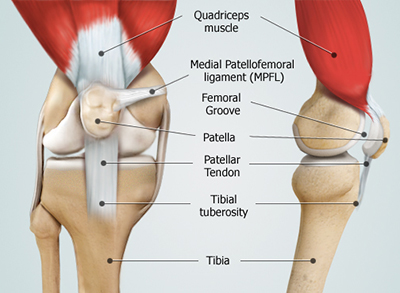
Ligaments are structures in your body that connect bones to other bones. In the knee, there are four major ligaments that connect the femur, tibia, and fibula, namely the anterior cruciate ligament (ACL), medial collateral ligament (MCL), lateral collateral ligament (LCL), and posterior cruciate ligament (PCL). The ACL and LCL cross one another in the inside of your knee, while your MCL and LCL are ligaments that are found on the outside of your knee.
The MCL plays a key role in stabilization. It connects the femur (thigh bone) to the tibia (shin bone). The MCL prevents injury to the inner (medial) part of the knee. Tears of the MCL vary in their severity depending upon the degree to which the ligament is torn.
The LCL runs along the outer side of both knees. The LCL plays an important role in stabilizing the knee. It helps prevent excessive movement of the knee to the side and it helps properly align the thigh and lower leg. Tears to the LCL can lower the function of the knee joint.
The PCL is found in the back of the knee joint. The PCL helps stabilize the knee, specifically by connecting your thigh bone (femur) to your shinbone (tibia). Like other ligaments in the knee, it is possible to tear your PCL.

Causes
Injury may occur to the ligaments of your knee by the following mechanisms:
- Contact sports such as football and soccer can lead to LCL tears.
- Trauma, such as direct hits to your knee or falling from a great distance
- Non-contact injuries, such as twisting movements beyond where the knee naturally is able to go.
Symptoms
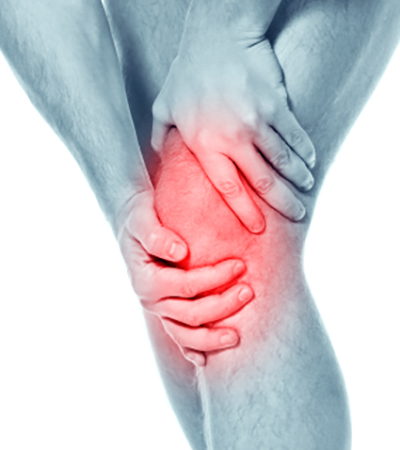
There are many symptoms that might suggest a tear to your knee ligaments:
- Pain/tenderness with daily activities
- Stiffness
- Swelling or bruising
- Limited range of motion
- Popping/cracking sensation
- Instability or a feeling like the knee might give out
- Locking/catching
Diagnosis
Diagnosis of an ligament tears in your knee often involves multiple modalities, such as Magnetic resonance imaging (MRI), radiographic imaging (X-ray), detailed patient history, and a thorough physical exam. More information on these methods is detailed below:
- Magnetic resonance imaging (MRI): This type of imaging is crucial for identifying the location and severity of soft-tissue injuries. If MRI is needed, our providers will thoroughly review the imaging to give you the correct diagnosis.
- Radiographic imaging (X-ray): This type of imaging is useful to our providers for assessing any additional bony injuries that might be associated with your condition.
- Patient history: Our providers ensure that a detailed history of your pain, the injury itself, and any other previous conditions or surgeries are considered throughout your treatment at the American Hip Institute.
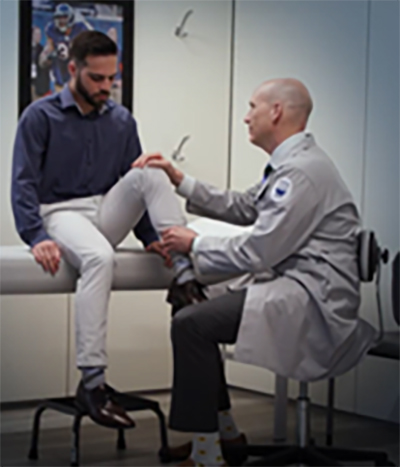
- Physical exam: Our providers might test your range of motion, your stability, and assess other physical findings to provide you with the correct diagnosis.

Non-Surgical Treatment Options
Treatment for ligament injuries can be non-operative or can involve surgery, depending upon the severity. Non-operative management can involve:
- Physical therapy
- Rest
- Icing
- Non-steroidal anti-inflammatory drugs (NSAIDs)
- Bracing
Surgical Options
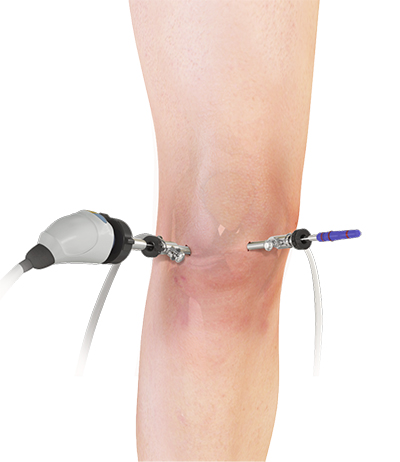
If surgical treatment is necessary, your provider will guide you through the best options based on your unique preferences, history, and clinical presentation. Common surgical procedures designed to treat tears and injuries in your knee are:
- Reconstruction: This procedure involves the use of an allograft or autograft to create a new ligament.
- Repair: This procedure involves repairing the torn tendon to its attachment point and occasionally supplementing it with graft tissue or high tensile suture to augment it.