
Arthritis
What is Shoulder Arthritis?
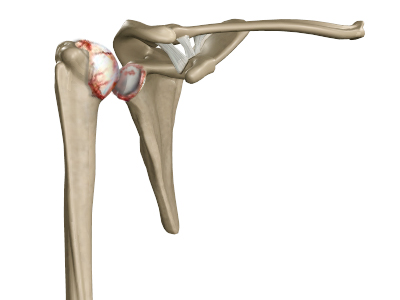
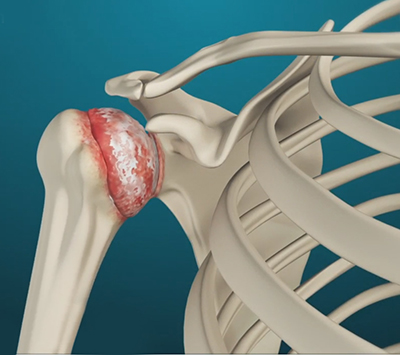
Cartilage damage or inflammation of the shoulder joint can gradually lead to arthritis. Cartilage is a tissue found inside your joints that cushions the bones and allows them to glide smoothly across each other. As the cartilage wears down, patients begin to experience pain and stiffness in their shoulder joint. Once the cartilage has completely worn away, the bones in the joint will make direct contact, causing significant pain and inflammation in the shoulder joint.
There are two joints in the shoulder which can be impacted by arthritis. The main shoulder joint is called the glenohumeral joint. This ball-and-socket joint lies at the junction of the humeral head (the “ball” of the upper arm bone) and the glenoid (the rounded “socket” on the edge of the shoulder blade). Another joint within the shoulder is called the acromioclavicular or AC joint and is located at the point where the acromion (the top of the shoulder blade) meets the clavicle (the collarbone).
Causes
There are many possible causes of shoulder arthritis, which include:
- Osteoarthritis is the most common cause of shoulder arthritis. This degenerative joint disease is associated with the wear and tear of joints as patients get older.
- Rheumatoid arthritis is an autoimmune disorder. The immune system attacks the lining of the shoulder joint, causing pain and inflammation.
- Post-traumatic shoulder arthritis refers to the inflammation and cartilage damage that can arise after a traumatic shoulder injury, such as a fracture or dislocation.
- Rotator cuff tear arthropathy can cause arthritis as a result of a large, prolonged rotator cuff tear. The rotator cuff tendons hold the humeral head in place, so in the event of a prolonged tear, the head can fall out of place and rub against other shoulder bones, causing cartilage damage.
- Avascular Necrosis Loss of blood supply to your shoulder can cause degeneration of the bones of the shoulder, leading to inflammation and arthritis.
Symptoms
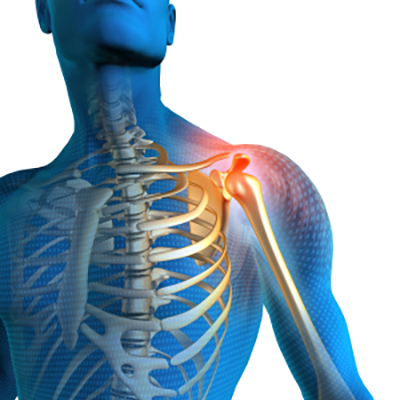
The symptoms of shoulder arthritis include pain in the shoulder joint, stiffness and loss of range of motion, as well as grinding, clicking, or cracking.
Diagnosis
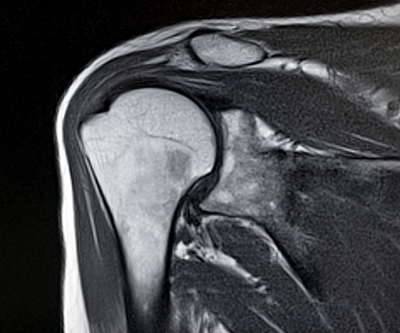
Diagnosing shoulder arthritis can involve a combination of a medical history review, assessment of symptoms, physical examination, and imaging tests. Your provider may utilize any of the following tests to diagnose your condition:
- X-Rays: Using X-rays, they can check for structural abnormalities and signs of arthritis.
- Physical Examination: Various physical examination maneuvers can test range of motion, joint stability, and pain with specific tests to assess the shoulder joint.
- Medical History: Your shoulder may also inquire about your medical history, including previous injuries and surgeries, in conjunction with your current symptoms.
Treatment Options
While there is no treatment for re-growing damaged cartilage, the following non-surgical treatment options may help relieve some of the symptoms associated with shoulder arthritis.
- Activity modification and rest
- Ice and heat
- NSAIDs
- Cortisone injections
- Plasma rich platelets (PRP) injections
Surgical Options
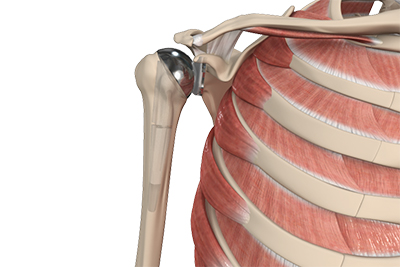
Surgical options for treatment of shoulder arthritis include prevention techniques in shoulder arthroscopy or total shoulder replacement.
- Shoulder Arthroscopy- Arthroscopy to improve bone spurs or remove loose bodies.
- Total Shoulder Replacement- An open procedure that corrects glenohumeral joint arthritis by using implants custom fitted to each patient [1].
Resources & References
[1] AC Joint Problems. Johns Hopkins Medicine. (2023, March 21).
[2] Menge TJ, Boykin RE, Bushnell BD, Byram IR. Acromioclavicular osteoarthritis: a common cause of shoulder pain. South Med J. 2014 May;107(5):324-9. doi: 10.1097/SMJ.0000000000000101. PMID: 24937735