
Revision Shoulder Surgery
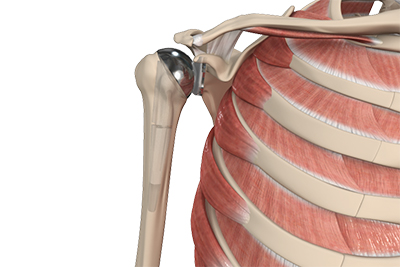
Both shoulder arthroscopy and shoulder replacement procedures have been shown to be favorable surgeries with excellent long-term results [1,2]. However, sometimes these surgeries might require revision surgery. A revision surgery is a subsequent surgery that is performed on the shoulder when the primary surgery needs to be corrected. The overall purpose of revision surgery is to alleviate pain and correct limited function of the affected joint that might still be present after the first operation.
Revision surgery can be performed after both a shoulder arthroscopy and shoulder replacement. It involves recorrecting the anatomy or replacing the implants that were used in the primary surgery.
Indications for Revision Shoulder Surgery
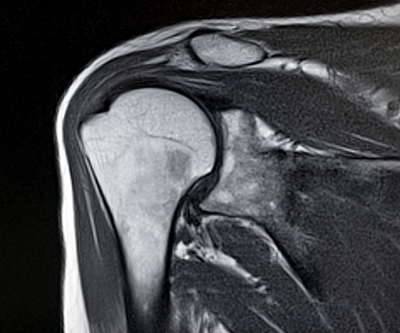
There are different reasons why a person might need revision shoulder surgery, which are described in the section below. Reasons why a person might have to undergo a revision shoulder arthroscopy include [1]:
- Reinjury or trauma to the joint: If a patient re-injures their shoulder joint or has trauma to the joint, it might need to be repaired.
- Untreated shoulder impingement: If the patient’s impingement was not properly corrected during their primary hip arthroscopy, it may cause further damage to the structure of the shoulder joint.
- Instability: If a patient is experiencing instability in their shoulder after their first surgery, they might need further surgical treatment to correct this condition.
- Osteoarthritis: Patients who underwent a primary shoulder arthroscopy with arthritis present in their joint are likely to need a subsequent surgery.
Reasons why a person might have to undergo a revision total shoulder replacement include:
- Fracture or trauma to the joint: Fracturing or trauma of the bones that make up the shoulder joint might damage or displace the implants from the primary procedure.
- Wear and tear of implant: The implants used for shoulder replacement are made to last many years but will experience normal wear over time and might need to be replaced.
- Loosening/instability or poor alignment of the implant: If the patient was experiencing instability of their replaced shoulder or the implant was not placed accurately during the first procedure, then this might necessitate a secondary procedure.

Description of Surgery
A revision shoulder arthroscopy or revision total shoulder replacement are similar to the primary surgeries. You can read more about shoulder arthroscopy (hyperlink) and total shoulder replacement (hyperlink) on our website. However, often the revision surgery is more complex and might require more time and skill to perform. Revision surgery is oftentimes more complex, and particular procedures will be individualized based on your pain and what surgeries were done previously.
Citations & Further Reading
[1] Green A, Loyd K, Molino J, Evangelista P, Gallacher S, Adkins J. Long-term functional and structural outcome of rotator cuff repair in patients 60 years old or less. JSES Int. 2022 Oct 30;7(1):58-66. doi: 10.1016/j.jseint.2022.10.002. PMID: 36820436; PMCID: PMC9937847.
[2] Evans JP, Evans JT, Craig RS, Mohammmad HR, Sayers A, Blom AW, et al. How long does a shoulder replacement last? A systematic review and meta-analysis of case series and national registry reports with more than 10 years of follow-up. Lancet rhematology. 2022 Sep; 2(9): 539-548. Doi: 10.1016/S2665-9913(20)30226-5