

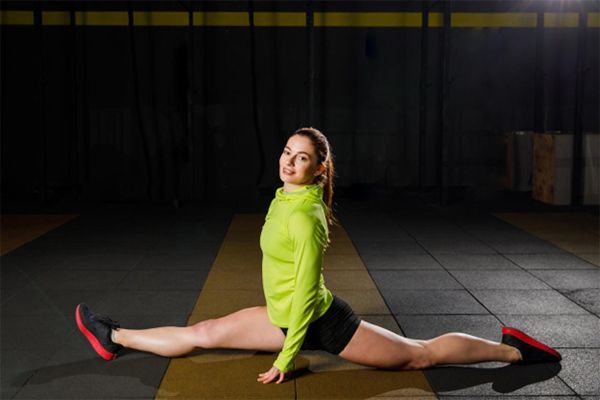
Women are often told that clicking hips or deep pelvic aches are just "part of being active," but the biological reality is far more complex. From the structural width of the pelvis to the cyclical shifts in ligament laxity, female biology presents a unique set of biomechanical challenges. Exploring these three interconnected factors reveals why women face a higher risk of hip injury.
The Q-Angle Explained: How Female Hip Alignment Affects Joint Stress
The primary reason for the gender gap in hip pain starts with skeletal structure. To facilitate childbirth, the female pelvis is naturally wider than the male pelvis. While this is an evolutionary necessity, it changes the mechanical pull of the muscles on the hip and knee joints.
This increased width creates a sharper angle between the hip and the knee, known as the Q-angle. A higher Q-angle places greater lateral stress on the hip joint and the iliotibial (IT) band. Over time, this "offset" alignment can contribute to Greater Trochanter Pain Syndrome (GTPS), a condition that causes pain along the outer hip and often involves irritation of the tendons and soft tissues near the greater trochanter. It can also contribute to uneven wear on the labrum, as the femur rotates inward more aggressively during high-impact activities like running or jumping.
Hypermobility in Women: When Flexibility Leads to Hip Instability
Statistics show that generalized joint hypermobility is significantly more prevalent in women. While being "flexible" might seem like an advantage in yoga or gymnastics, it often masks a lack of joint stability.
In a hypermobile hip, the ligaments that are supposed to act as "seatbelts" for the joint are too stretchy. This puts an immense burden on the acetabular labrum (the cartilage ring) to keep the ball centered in the socket. When the muscles fatigue, the joint "shears" slightly with every step. For women with undiagnosed hip dysplasia, this combination of shallow sockets and loose ligaments is a recipe for early-onset micro-instability and chronic pain.
The Hormonal Factor: Relaxin and the Menstrual Cycle
Hormones play a silent but powerful role in joint integrity. Throughout the menstrual cycle, levels of estrogen and relaxin fluctuate. Relaxin, as the name suggests, is designed to loosen ligaments. While its primary fame comes from its role in preparing the body for birth, it affects all connective tissues in the body.
During specific phases of the cycle, particularly ovulation and the days leading up to menstruation, ligament laxity increases. This temporary "looseness" can lead to subtle shifts in hip tracking, making women more susceptible to acute tears or inflammatory flare-ups. For perimenopausal women, the drop in estrogen can further reduce collagen production, making the tendons around the hip more brittle and prone to tendinopathy.
How Targeted Therapy Can Help Stabilize the Female Hip
Because the female hip faces this "triple threat" of structural, hormonal, and stability challenges, a one-size-fits-all approach to physical therapy rarely works. Treatment must focus on neuromuscular control, teaching the brain to fire the deep rotators of the hip to compensate for loose ligaments.
Understanding these biological drivers is the first step toward moving without pain. If your hip feels "unstable" or "loose," it isn't in your head; it’s in your biology.
Frequently Asked Questions
- Why does my hip pain flare up during my menstrual cycle?
Hormonal shifts, specifically an increase in relaxin, can cause temporary ligament laxity. This makes your joints "looser" and less stable, which can lead to increased friction in the hip socket and inflammation of the surrounding soft tissues during certain phases of your cycle. - Is "snapping hip syndrome" more common in women?
Yes. Due to a wider pelvic structure and a higher Q-angle, the tendons (like the IT band or iliopsoas) are under more tension. This can cause them to "snap" over the bony protrusions of the hip, leading to an audible click and potential bursitis over time. - Can hypermobility lead to early hip arthritis?
It can if not managed. While flexibility is often seen as a gift, excessive "looseness" in the hip joint causes the bones to shear against the cartilage rather than rotating smoothly. This micro-instability can lead to labral tears and, eventually, premature wear of the joint surface. - How does pregnancy affect long-term hip health?
Pregnancy significantly increases mechanical load while further increasing relaxin levels to widen the pelvis. If the hip muscles aren't strengthened post-partum to compensate for this structural shift, it can lead to permanent changes in gait and chronic sacroiliac (SI) joint or hip pain. - What is the best type of exercise for women with hip instability?
Focus on closed-chain kinetic exercises and "proprioception" training. Instead of just stretching, prioritize movements like bridges, bird-dogs, and controlled single-leg balances. These train the deep hip rotators to stabilize the "ball" within the "socket," protecting the labrum from excess wear.
Reference Links: