

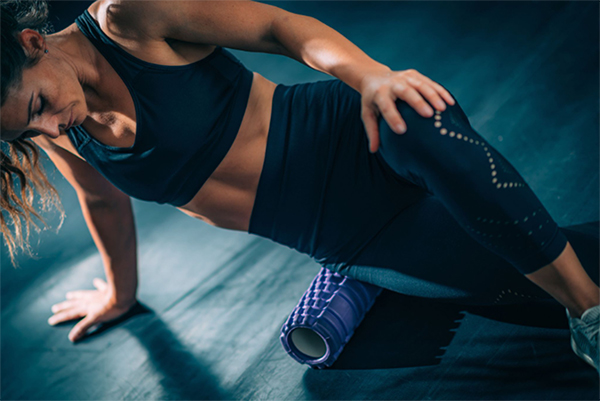
For years, women with hip instability have been told to stretch more, strengthen their glutes, or simply push through discomfort that feels vague and hard to describe. Yet for a significant number of women, what is being dismissed as tightness or muscular imbalance is actually joint instability. Here's why hip instability in women is often missed and what it takes to get it right.
Understanding Hip Instability
Hip instability refers to excessive movement of the femoral head within the acetabulum, disrupting normal joint mechanics. Unlike dislocation, instability is often subtle, a microinstability that creates chronic abnormal stress on the labrum, capsule, and cartilage with every step or rotation. The hip relies on bony congruency, the labral suction seal, capsular ligaments, and surrounding musculature to stay stable. When any of these are compromised, either structurally, hormonally, or through repetitive loading, the joint can become unstable in ways that are clinically easy to miss.
Why Women Are Disproportionately Affected
Female pelvic anatomy tends toward greater acetabular anteversion, reducing bony coverage of the femoral head in certain positions and increasing reliance on soft tissue for stability. A wider pelvis also alters load transmission through the hip, placing greater stress on the capsular ligaments and labrum.
Hormonal factors compound this. Estrogen and relaxin, which fluctuate across the menstrual cycle and spike during pregnancy, increase ligamentous laxity throughout the body. In the hip, this reduces capsular restraint and increases femoral head translation. Women with generalized ligamentous laxity, including those with hypermobility conditions such as Ehlers-Danlos syndrome, are particularly susceptible and among the most frequently misdiagnosed patients in orthopedic care.
Why Hip Tightness Gets the Blame
The symptoms of hip instability are notoriously non-specific. They include a deep groin ache, fatigue with prolonged activity, occasional catching, and a sense the hip is not sitting right. These overlap significantly with hip flexor tightness, iliopsoas pathology, and lumbar spine issues, making instability easy to overlook.
Many women with instability also present with impressive flexibility. The very laxity driving their problem may make them appear physically capable, masking the structural vulnerability. The result is a cycle of stretching and strengthening protocols that provide temporary relief while the underlying joint problem continues to progress.
The Role of the Labrum, Capsule, and Dysplasia
In the unstable hip, the labrum bears a disproportionate mechanical burden, compensating for inadequate capsular restraint. This is why labral tears are so commonly found alongside instability in women. The tear is often the consequence of a chronically unsupported joint, not the primary problem.
Acetabular dysplasia, which is insufficient bony coverage of the femoral head, is one of the most common structural causes of instability and is significantly more prevalent in women. Mild and borderline dysplasia are particularly prone to misdiagnosis because plain X-rays may appear relatively normal, and symptoms develop gradually. Without addressing the bony architecture, even a well-executed labral repair will face the same forces that caused the original failure.
What Accurate Diagnosis and Treatment of Hip Instability Require
Diagnosing hip instability requires assessment for generalized ligamentous laxity, detailed radiographic analysis of acetabular coverage, MRI arthrogram to evaluate labral and capsular integrity, and instability-specific physical examination maneuvers.
Treatment ranges from targeted stabilization exercises in mild cases to arthroscopic capsular plication, labral repair or reconstruction, and ligamentum teres reconstruction for structural instability. Where significant bony dysplasia is present, periacetabular osteotomy, which is reorienting the acetabulum to improve femoral head coverage, may be required alongside arthroscopic treatment.
Hip instability in women is often underrecognized. For women who have been told their symptoms don't warrant further investigation, a comprehensive evaluation by a hip preservation specialist may reveal a very different picture.
FAQs
- What does hip instability feel like in women?
It often presents as a deep, vague groin ache, a feeling of looseness, or the sensation that the hip is “slipping” or not stable. - How is hip instability different from muscle tightness?
Tightness involves restricted movement, while instability involves excessive movement and lack of joint control. - Can stretching make hip instability worse?
Yes, excessive stretching can increase joint laxity and worsen symptoms if instability is the underlying issue. - What conditions are commonly linked to hip instability in women?
Conditions like labral tears, hip dysplasia, and generalized hypermobility are frequently associated with instability. - When should I seek evaluation for possible hip instability?
If you have persistent hip discomfort, a sense of instability, or symptoms that don’t improve with standard therapy, a specialist evaluation is recommended.
Reference Links: