
Arthroscopic Labral Repair & Reconstruction
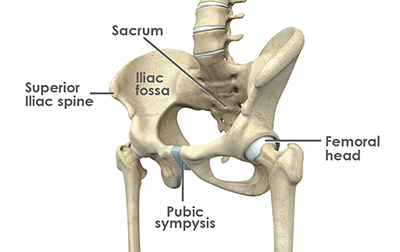
Hip Anatomy
The bones that make up the hip joint include the head of the femur (head of thigh bone) and the acetabulum (socket of the hip). Between these bones lies the labrum, a ring of cartilage around the acetabulum. The labrum is a very important structure in the hip. It stabilizes the joint by acting as a “suction seal” of the joint. The “suction seal” seals joint fluid inside of the joint, which lubricates and allows for frictionless movement.
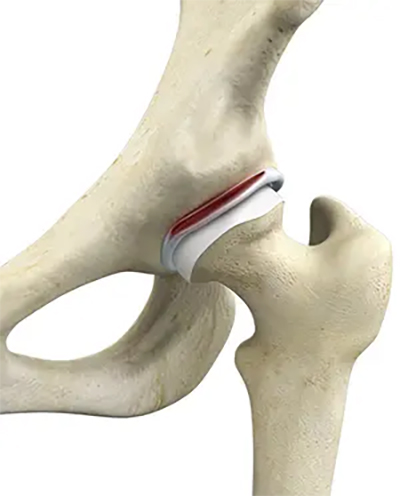
What are Labral Repairs & Labral Reconstructions?
A labral tear is an injury or damage of the hip labrum. When conservative measures such as anti-inflammatory medication, physical therapy, and regenerative medicine do not provide relief from symptoms, your provider may recommend a labral repair or reconstruction.
Labral repair and labral reconstruction surgeries are minimally-invasive procedures performed with an arthroscope, or a thin flexible tube with a camera, that is inserted into the joint. Your surgeon will be able to see into your joint and assess the damage to the labrum. When performing a labral repair, your surgeon will repair the tear in the labrum using small anchors to fix it back into place. However, if your surgeon determines that the labrum is too damaged to be repaired, they will perform a labral reconstruction. In this procedure, your surgeon will replace your labrum with a graft. Like a labral repair, labral reconstruction will correct the anatomy of your hip by restoring the function of the labrum.
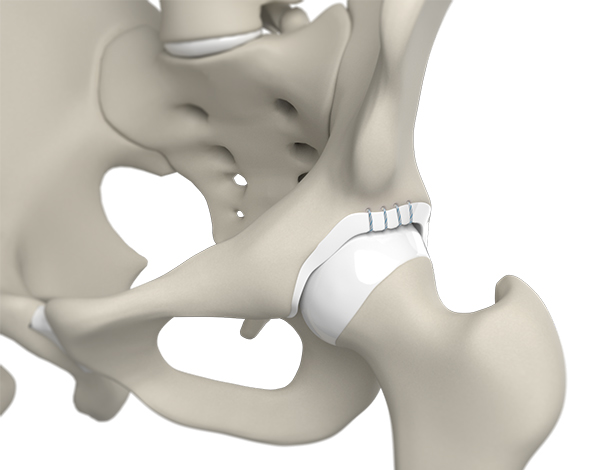
Description of Procedure
Labral repairs and reconstructions are performed in a similar manner. Your surgeon will look inside of your joint to determine the extent of the damage to your labrum. If the labrum mostly in-tact and viable, your surgeon will repair the labrum and put it back in place. However, your surgeon might observe that your labrum is too damaged to be repaired. In this case, your surgeon will use a graft to replace your labrum.
Both of these procedures aim to repair the suction seal and stability of the joint.

Post Operative Care
Your doctor and care team will provide you with post operative care instructions after your surgery. Adhering to those instructions is important in your recovery process. This may include instructions like taking medications as prescribed, using crutches, physical therapy, and avoiding activity until you are cleared by your care team.
Learning Resources
Read blogs written by hip arthroscopy specialists
- How long until I can play a sport after a labral repair?
- What is my recovery like after labral repair?
Browse research on labral repair and reconstruction

Meet Experts in Labral Repair and Reconstruction at the American Hip Institute
We specialize in arthroscopic labral repair and reconstruction, restoring hip stability and function while preserving native anatomy whenever possible.
AHI serves Chicago and the greater Chicagoland area and attracts patients nationally and internationally for complex hip surgery. We combine leading research expertise with individualized surgical planning. Request an appointment now.