
Labral Tears
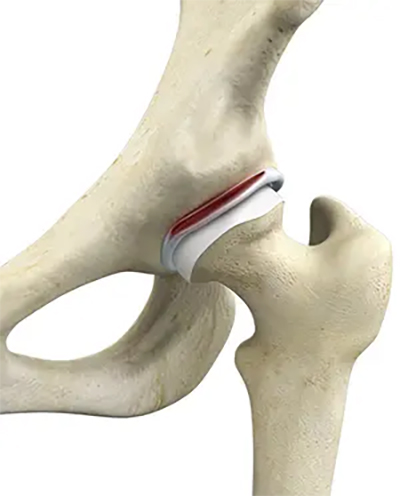
What Is a Hip Labral Tear?
The labrum is cartilage that lies between the femur (ball of the thighbone) and socket of the pelvis. It seals the hip joint, helping keep the femur and pelvis securely positioned. The labrum also provides stability, smooth movement, and cushion to the joint during movement.
When the labrum is damaged or torn, it can cause inflammation and impact the nerves in the hip joint, causing one to experience pain and other symptoms. The disruption of the hip’s suction seal also causes the joint to lose its lubrication and stability, compromising the articular cartilage and potentially accelerating the progression of arthritis.

What Are the Symptoms of a Hip Labral Tear?
Although it is possible to have a torn labrum without symptoms, common symptoms that one may experience include:
- Pain in the groin area
- Pain in the lower back or buttocks
- Weakness and instability in the hip joint
- Catching or locking sensations
- Clicking sounds
- Limited range of motion
- Stiffness in the hip

What Causes Hip Labral Tears?
A hip labral tear can develop from a single injury or from gradual wear and tear over time. Some people may be more susceptible to labral tears due to their hip anatomy, underlying structural conditions, or genetic factors. Repetitive stress on the hip joint can also increase the risk of injury.
Common causes of hip labral tears include:
- Structural abnormalities of the hip: Conditions such as femoroacetabular impingement (FAI) can place excessive stress on the labrum
- Degenerative changes: Age-related wear and tear of the hip joint can weaken the labrum
- High-impact activities: Repeated participation in sports or activities that place significant stress on the hip may contribute to joint damage over time.
- Repetitive hip movements: Sometimes called overwork injuries, frequent twisting, pivoting, or rotational movements performed during exercise, work, or daily activities can increase strain on the labrum.
- Traumatic injuries: Sudden injuries, such as motor vehicle accidents, falls, or sports-related trauma, can cause the labrum to tear. Sports commonly associated with labral tears include football, soccer, basketball, and skiing.
How is a Hip Labral Tear Diagnosed?
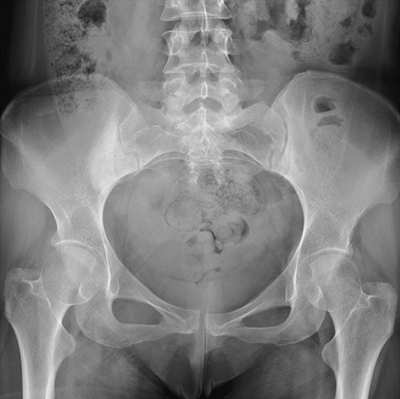
Diagnosing a torn labrum in the hip can involve a combination of a medical history review, assessment of symptoms, physical examination, and imaging tests. Our providers at the American Hip Institute may utilize any of the following tests to diagnose your condition:
- X-Rays: Providers can rule out other possible underlying conditions that may contribute to the pain you're experiencing. Using X-rays, they can check for structural abnormalities and fractures.
- Magnetic Resonance Imaging (MRI): This imaging test can be used to evaluate the condition of your labrum and other soft-tissue structures. An MR arthrogram (MRA) is an imaging procedure that involves injecting a contrast dye material into the hip joint space to clearly visualize the labrum and other structures.
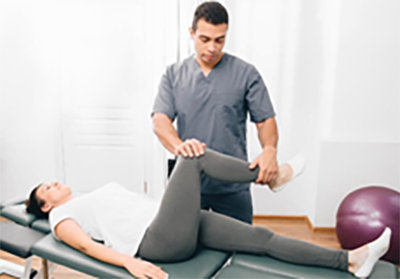
- Physical Examination: Various physical examination maneuvers can test range of motion, joint stability, and pain with specific tests that are sensitive to labral tears or other conditions of the hip. These tests include the flexion / adduction / internal rotation (FADIR) impingement test, which is highly sensitive to labral tears.
- Medical History: Our certified medical practitioners will also inquire about your medical history, including previous injuries and surgeries, in conjunction with your current symptoms.
- Diagnostic Injection With Local Anesthetic: In some cases, a diagnostic injection using a local anesthetic may be administered into the joint space to determine whether a patient’s pain is stemming from damage to structures within the hip joint, like the labrum, or from elsewhere.
How Do You Treat Labral Tears of the Hip?
Treatment for a hip labral tear depends on the severity of the tear, symptoms, activity level, and whether there is an underlying structural issue such as FAI or hip dysplasia.
- Nonsurgical Treatment Options: Many patients improve with conservative treatment. Patients with a minor labral tear may recover within a few weeks with the help of non-surgical treatments.
- Activity Modification and Rest: Doctors may recommend avoiding certain activities and opting for rest to help reduce symptoms.
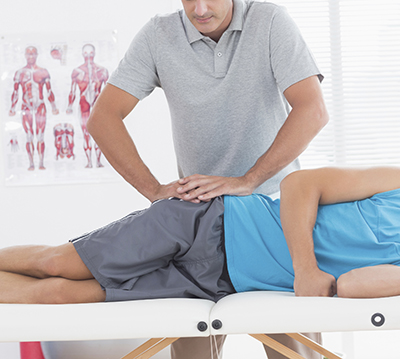
- Physical Therapy: Physical therapy can help improve your range of motion and strengthen the muscles supporting your hip joint.
- Medications: Anti-inflammatory medications (like NSAIDs) can help reduce the pain and inflammation associated with torn cartilage.
When Is Surgery Recommended for a Hip Labral Tear?
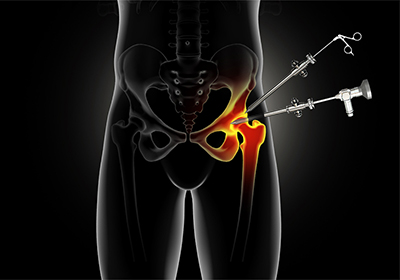
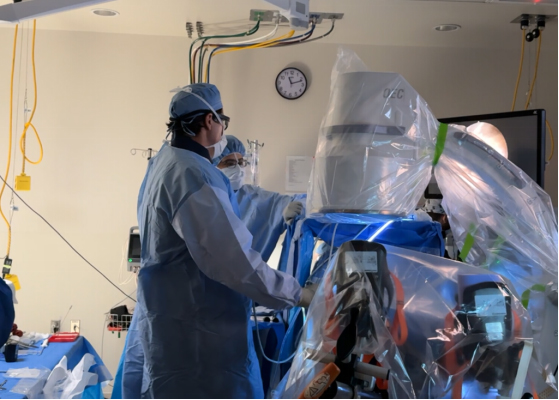
Surgery may be recommended for labral tears when nonsurgical treatments do not provide adequate relief or when structural abnormalities within the hip are contributing to ongoing pain and joint damage. Hip arthroscopy is a minimally invasive procedure that uses two to three small incisions and a specialized camera called an arthroscope to evaluate and treat the injured labrum.
Depending on the severity of the tear, the surgeon may perform either a labral repair or a labral reconstruction.
- Labral Repair : When the tissue is healthy enough to be preserved, the torn labrum can be reattached to the hip socket using specialized sutures and anchors.
- Labral Reconstruction : For larger or irreparable tears, the damaged labrum may be replaced with a graft that restores the function of the native labrum and helps recreate the hip's suction seal.
If structural abnormalities such as femoroacetabular impingement (FAI) are present, they can often be corrected during the same procedure to help reduce stress on the labrum and improve long-term outcomes.
What Is Recovery Like After Hip Labral Tear Surgery?
Recovery after hip labral tear surgery is a gradual process that focuses on protecting the hip, restoring mobility, and rebuilding strength. Following your procedure, your surgeon will provide detailed instructions regarding incision care, activity restrictions, and rehabilitation. Depending on the procedure performed, patients may need to use crutches and wear a hip brace for a period of time to protect the repaired or reconstructed labrum during the early stages of healing.
Physical therapy plays an important role in recovery and is typically recommended to help restore strength, flexibility, and range of motion. Pain management strategies, including prescribed medications, may also be used to keep patients comfortable throughout the recovery process. Most patients can gradually return to daily activities as healing progresses, with the timeline varying based on the extent of the procedure and individual recovery goals.
When Should You See a Hip Specialist?
If you are experiencing persistent hip or groin pain, clicking or catching sensations in the hip, stiffness, limited range of motion, or discomfort during physical activity, it may be time to see a hip specialist. While some symptoms may improve with rest, ongoing pain or functional limitations can indicate an underlying condition such as a hip labral tear, femoroacetabular impingement (FAI), hip dysplasia, or cartilage damage.
A hip specialist has advanced training and experience in diagnosing and treating complex hip conditions. Early evaluation can help identify the source of your symptoms, prevent further joint damage, and determine the most appropriate treatment plan. If your symptoms are affecting your ability to exercise, work, participate in sports, or perform daily activities, seeking care from a hip specialist can help you get an accurate diagnosis and explore both nonsurgical and surgical treatment options.
Learning Resources
Read the blogs below on labral tears from top orthopedic specialists.
- What exercises to avoid with a torn labrum
- When can I go back to playing sports after labral repair surgery?
- Orthopedic surgeons describe what a labral tear may feel like
Browse research on labral tears

Meet Experts in Hip Labral Tears at the American Hip Institute
We specialize in the evaluation and treatment of hip labral tears, focusing on accurate diagnosis and both non-operative and surgical solutions to restore hip stability and function.
AHI serves Chicago and the greater Chicagoland area and attracts patients nationally and internationally. We combine extensive clinical experience with leading hip research and a personalized treatment pathway for each patient. Request an appointment now.