

A deep pinch in the front of your hip. A click when you pivot, an ache that stretching never fixes. Many people dismiss these signals as a pulled muscle, only to discover months later that something structural is wrong. One common culprit is a torn labrum, the cartilage ring that cushions your hip joint. Here is what you need to know about hip labral tear symptoms, diagnosis, and treatment.
What Is the Hip Labrum and Why Does It Matter?
The hip is a ball-and-socket joint. Around the rim of the socket sits the labrum, a ring of tough, rubbery cartilage. Think of it as a gasket on a jar lid. It deepens the socket, helps hold the joint fluid in place, and creates a gentle suction seal that keeps the ball stable as you move.
When the labrum tears, that seal and cushioning can be compromised. The result may be pain, catching, and extra stress on the surrounding cartilage over time. You can learn more about this condition on the hip labral tears page.
What Causes a Labral Tear?
Labral tears happen for several reasons. Some are sudden, such as a twisting injury during soccer, hockey, football, or dance. Others develop gradually through repetitive motion. Anatomy also plays a major role.
Many tears are linked to femoroacetabular impingement (FAI), where extra bone on the ball or socket causes the joint to pinch the labrum during movement. Hip dysplasia, instability or conditions that cause lax joints such as Ehlers Danlos Hypermobility, can overload the labrum in a different way. Understanding the underlying cause matters because fixing the tear without addressing the cause may leave the problem in place.
Common Symptoms of a Hip Labral Tear
Symptoms vary, and some people have a tear with no pain at all. When symptoms appear, they often include:
- A deep ache or sharp pinch in the groin or front of the hip
- Clicking, catching, or locking during movement
- Stiffness or reduced range of motion
- Pain when sitting for long periods, climbing stairs, or getting out of a car
- A feeling that the hip is unstable or may give way
Pain location can be misleading. Hip problems are sometimes felt in the thigh, buttock, or lower back, which is why symptoms are often mistaken for a muscle strain. The practice's hip pain by location guide can help you understand where different conditions tend to hurt. Related issues such as athletic pubalgia or snapping hip syndrome can look similar, which makes an accurate diagnosis essential.
How Is a Hip Labral Tear Diagnosed?
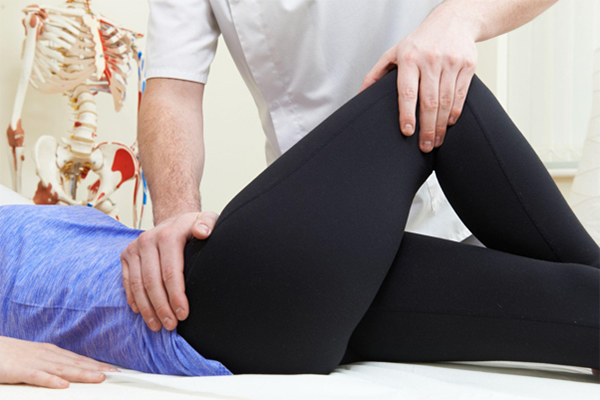
Diagnosis begins with a detailed history and a physical exam. Your physician may move your hip through specific positions to see whether they reproduce your pain. Imaging then adds detail.
X-rays reveal bone shape and can show impingement or dysplasia. An MRI, sometimes with contrast dye injected into the joint, gives a clearer picture of the labrum and cartilage. Some patients also receive a diagnostic injection of numbing medication, which helps confirm whether the pain is truly coming from inside the joint.
Finding the right diagnosis is more than a formality. Hip pain has many possible sources, and treating the wrong one wastes time. That is why many hip specialists emphasize a thorough evaluation, and why some patients seek an expert second opinion when their pain persists without a clear explanation.
Non-Surgical Treatment Options
Not every labral tear needs surgery. For mild symptoms, a conservative approach is often the first step. It may include activity modification, anti-inflammatory medication, and targeted physical therapy to strengthen the muscles around the hip and improve movement patterns.
Some patients also explore regenerative medicine options, which aim to calm inflammation and support healing. Evidence for these treatments varies, so it is worth asking your physician what the research shows for your specific situation.
A torn labrum does not heal or regrow, so non-surgical care focuses on managing symptoms and function. If pain continues or limits your life despite a fair trial of conservative care, surgery may be the next conversation.
Surgical Treatment: Hip Arthroscopy and Labral Repair
Hip arthroscopy is a minimally invasive procedure performed through a few tiny incisions. A small camera lets the surgeon see inside the joint, while specialized instruments repair the damage. In many cases, surgeons perform an arthroscopic labral repair or reconstruction, reattaching healthy tissue to the bone or rebuilding the labrum when the original tissue cannot be saved.
Just as important, the surgeon addresses what caused the tear, often by reshaping the bone that was causing impingement. Related problems, such as cartilage defects or loose bodies, can sometimes be treated during the same procedure.
What Does Recovery Look Like?
Recovery depends on the procedure and the individual. Many patients use crutches for a period after surgery, then progress through structured physical therapy over several months. Returning to sports usually takes longer than returning to daily life, and following your rehabilitation plan closely has a major influence on results.
Patience matters. Most improvement happens gradually, and your care team will guide each stage based on your healing.
Frequently Asked Questions About Hip Labral Tears
What are the symptoms of a hip labral tear?
Common symptoms include a deep ache or pinch in the groin or front of the hip, clicking or catching, stiffness, and pain with sitting, pivoting, or climbing stairs. Some people feel hip instability, while others have a tear with no symptoms.
How do you know if you have a torn labrum in your hip?
A physical exam and imaging are needed to confirm a labral tear. Physicians typically combine your symptoms and exam findings with X-rays and an MRI, sometimes with contrast dye, to see the labrum clearly.
Can a hip labral tear heal on its own?
A torn labrum generally does not heal on its own because the tissue has limited blood supply. Symptoms may improve with physical therapy and activity changes, but the tear itself often remains.
Do all hip labral tears need surgery?
No. Many patients with mild symptoms improve with conservative treatment such as physical therapy and activity modification. Surgery is usually considered when pain persists or limits daily life despite non-surgical care.
How long is recovery after hip labral repair?
Recovery varies, but many patients spend several months in rehabilitation. Daily activities often return before sports. Your surgeon and physical therapist will set a timeline based on your procedure and healing.
Get Clear Answers About Your Hip Pain
Persistent hip pain deserves a clear diagnosis, not guesswork. If you suspect a labral tear, the team at American Hip Institute can help you understand your options and plan next steps.