
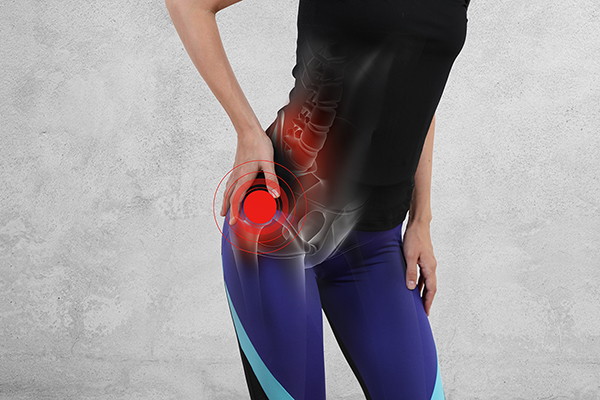
Hip arthroscopy can successfully treat conditions such as labral tears and femoroacetabular impingement, but recovery is not always immediate and not every patient experiences complete pain relief after surgery. Some discomfort is expected during healing, while persistent or worsening pain may indicate that the hip needs further evaluation. Understanding the difference between normal recovery and ongoing pathology is an important part of the postoperative process.
Recovery After Hip Arthroscopy Takes Time
Hip arthroscopy is minimally invasive, but it is still surgery. Depending on the procedure performed, the surgeon may repair the labrum, reshape bone, treat cartilage damage, address the joint capsule, or perform other procedures inside the hip.
The surrounding muscles and soft tissues also need time to recover. Patients may experience soreness, stiffness, weakness, altered walking mechanics, or discomfort as activity levels increase during rehabilitation.
Recovery is therefore rarely completely linear. A patient may feel better for several weeks and then experience increased soreness after progressing activity or physical therapy. Temporary setbacks do not automatically mean that surgery has failed.
Why Can Pain Persist After Hip Arthroscopy?
There are many possible explanations for persistent pain after hip arthroscopy, and they are not all related to a problem with the surgical repair.
One possibility is simply that the hip is still healing. Muscle weakness and changes in movement patterns can place additional stress on the hip during recovery. The iliopsoas and other muscles around the front of the hip may also become irritated as they compensate for weakness elsewhere.
Other patients may have pain related to residual or recurrent pathology within the hip. Persistent femoroacetabular impingement, recurrent labral pathology, cartilage damage, hip instability, or other structural abnormalities may contribute to ongoing symptoms.
Pain can also come from structures outside the joint, including the gluteal tendons, bursae, abdominal or pelvic muscles, nerves, or the lumbar spine.
Persistent Pain Does Not Always Mean the Surgery Failed
One of the most difficult parts of recovery is determining whether ongoing symptoms are part of the normal healing process.
Pain that gradually improves while strength and function continue to increase can be consistent with recovery. On the other hand, pain that remains unchanged, progressively worsens, or returns after a significant period of improvement deserves additional attention.
The timing and character of the pain matter. Deep groin pain, lateral hip pain, buttock pain, pain with weight bearing, snapping, instability, and pain associated with specific movements can each point toward different potential sources.
A careful physical examination can help distinguish between these possibilities.
When the Underlying Diagnosis Matters
Hip arthroscopy works best when the underlying problem has been correctly identified and the patient is an appropriate candidate for the procedure.
For example, femoroacetabular impingement can cause labral and cartilage damage. If significant impingement remains after surgery, symptoms may persist.
Hip dysplasia or instability can also affect the outcome of arthroscopy. A hip that does not have adequate structural coverage may require a different treatment strategy from a hip in which the primary problem is impingement.
Other anatomical factors, including femoral and acetabular version, can influence how the hip moves and how forces are distributed across the joint.
This is why evaluating the whole hip is so important when pain continues after surgery.
What Happens When Imaging Looks Normal but Pain Continues?
Postoperative imaging can be difficult to interpret. Surgical anchors, scar tissue, changes in the labrum, and normal postoperative healing can alter the appearance of the hip.
If pain persists despite apparently reassuring imaging, the next step is to correlate the imaging findings with the patient's symptoms and physical examination rather than assuming that the imaging provides the entire answer.
Depending on the situation, physicians may consider updated X-rays, MRI or MR arthrography, CT imaging, dynamic ultrasound, or a diagnostic injection. Blood tests may also be appropriate when infection is a concern.
A diagnostic injection can be particularly useful when there is uncertainty about whether pain is actually coming from inside the hip joint.
When Should You See a Hip Specialist?
Persistent pain after hip arthroscopy does not necessarily mean that another surgery is needed. In many cases, the appropriate next step may be rehabilitation, activity modification, treatment of surrounding soft tissues, or simply allowing additional time for recovery.
However, persistent or worsening symptoms deserve a thorough evaluation.
This is especially true when pain is accompanied by increasing stiffness, instability, mechanical symptoms, significant weakness, difficulty bearing weight, or a substantial decline in function.
A comprehensive hip specialist can review the original diagnosis, operative report, postoperative course, physical examination, and imaging together. This can help determine whether the patient is experiencing expected recovery, a problem related to the original hip condition, or an entirely different source of pain.
The Bigger Picture
Pain after hip arthroscopy does not automatically mean the surgery failed. Recovery takes time, and temporary pain or setbacks can occur as the hip becomes stronger and activity increases.
But persistent pain should not simply be dismissed, particularly when symptoms are not improving or do not resemble the expected recovery pattern. The hip is a complex joint, and ongoing symptoms can have many potential causes-from postoperative muscle weakness to residual impingement, instability, cartilage damage, or pain originating outside the hip.
If your hip continues to hurt after arthroscopy, a comprehensive evaluation can help determine why it hurts. Identifying the underlying source of pain is the first step toward determining whether additional rehabilitation, nonsurgical treatment, or further intervention is appropriate.
Frequently Asked Questions
- How long does pain last after hip arthroscopy?
Recovery varies depending on the procedure performed and the individual patient. Pain and stiffness are common during the early recovery period and should generally improve as healing and rehabilitation progress. - Does continued pain mean my hip arthroscopy failed?
Not necessarily. Recovery can be gradual and nonlinear. Persistent or worsening pain, however, should be evaluated to determine whether there is an underlying issue. - Why does my hip hurt months after arthroscopy?
Possible causes include ongoing healing, muscle weakness, iliopsoas irritation, residual impingement, recurrent labral pathology, cartilage damage, instability, or pain coming from outside the hip. - Can hip dysplasia cause problems after hip arthroscopy?
Yes. The structural coverage and stability of the hip are important factors when determining whether arthroscopy is appropriate and what treatment is needed. - Should I get a second opinion if I still have pain after hip arthroscopy?
A second opinion can be appropriate when pain persists, the cause is unclear, or symptoms do not match the expected recovery. A comprehensive hip specialist can review the original diagnosis, surgery, imaging, and recovery together.